
 Imagen 1 de 1
HVAC Service Description
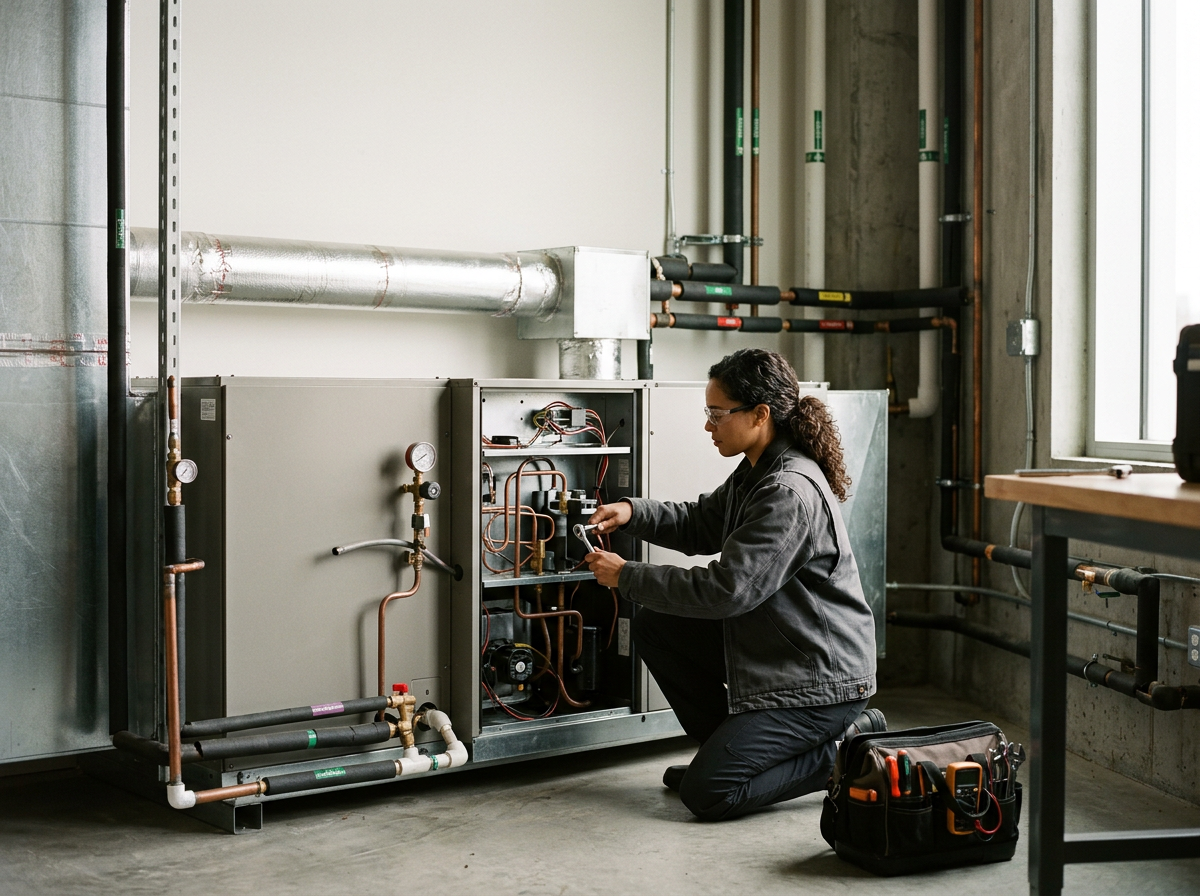
Comprehensive HVAC service for residential and light-commercial properties focused on safety, reliability, efficiency, and occupant comfort.
What’s included
System inspection: Thorough evaluation of heating, ventilation, and air conditioning equipment, including furnaces, air handlers, heat pumps, condensers, evaporator coils, ductwork, thermostats, and controls.
Diagnostic testing: Performance checks for airflow, refrigerant charge, combustion safety (where applicable), electrical connections, and system cycling to identify issues and inefficiencies.
Preventive maintenance: Cleaning or replacing air filters, inspecting and cleaning coils, condensate drains and pans, lubricating motors and moving parts, tightening electrical connections, and checking belts and pulleys.
Safety checks: Carbon monoxide testing, flue and vent inspection, pilot and ignition system checks, and verification of safe operation for gas-fired equipment.
Refrigerant service: Leak detection, refrigerant level testing, and recharge or recovery in compliance with regulations (if required).
Air quality assessment: Inspection of ventilation and filtration systems, recommendations for upgraded filters, UV lamps, or air purifiers to reduce allergens, dust, and microbial growth.
Thermostat calibration and controls: Verify and calibrate thermostats, program schedules, and test smart or zoning controls for proper operation.
Duct inspection and sealing: Visual inspection for leaks, poor insulation, and blockages; recommend or perform sealing, insulation, and repairs to improve efficiency and airflow.
Performance optimization: Recommendations and adjustments to improve system efficiency and lower energy costs (e.g., setpoint strategies, equipment upgrades, or retrofits).
Detailed reporting: Written summary of findings, recommended repairs or replacements, cost estimates, and priority rating for each item.
Benefits
Improved comfort and consistent temperatures throughout the property.
Enhanced system efficiency and lower energy bills.
Fewer unexpected breakdowns and longer equipment lifespan.
Improved indoor air quality and reduced allergen levels.
Increased safety for gas and combustion appliances.
Documentation for warranties and home resale.
HVAC Service Description
Comprehensive HVAC service for residential and light-commercial properties focused on safety, reliability, efficiency, and occupant comfort.
What’s included
System inspection: Thorough evaluation of heating, ventilation, and air conditioning equipment, including furnaces, air handlers, heat pumps, condensers, evaporator coils, ductwork, thermostats, and controls.
Diagnostic testing: Performance checks for airflow, refrigerant charge, combustion safety (where applicable), electrical connections, and system cycling to identify issues and inefficiencies.
Preventive maintenance: Cleaning or replacing air filters, inspecting and cleaning coils, condensate drains and pans, lubricating motors and moving parts, tightening electrical connections, and checking belts and pulleys.
Safety checks: Carbon monoxide testing, flue and vent inspection, pilot and ignition system checks, and verification of safe operation for gas-fired equipment.
Refrigerant service: Leak detection, refrigerant level testing, and recharge or recovery in compliance with regulations (if required).
Air quality assessment: Inspection of ventilation and filtration systems, recommendations for upgraded filters, UV lamps, or air purifiers to reduce allergens, dust, and microbial growth.
Thermostat calibration and controls: Verify and calibrate thermostats, program schedules, and test smart or zoning controls for proper operation.
Duct inspection and sealing: Visual inspection for leaks, poor insulation, and blockages; recommend or perform sealing, insulation, and repairs to improve efficiency and airflow.
Performance optimization: Recommendations and adjustments to improve system efficiency and lower energy costs (e.g., setpoint strategies, equipment upgrades, or retrofits).
Detailed reporting: Written summary of findings, recommended repairs or replacements, cost estimates, and priority rating for each item.
Benefits
Improved comfort and consistent temperatures throughout the property.
Enhanced system efficiency and lower energy bills.
Fewer unexpected breakdowns and longer equipment lifespan.
Improved indoor air quality and reduced allergen levels.
Increased safety for gas and combustion appliances.
Documentation for warranties and home resale.